
Setting is the Most Undervalued Character
Or, how to write a setting that sells your story

Hello again. Today we’re talking about setting.
This is part of my series of writing—and selling—your book in 2026.
If we haven’t met, I’m a bestselling novelist who has sold five books to a Big 5 publisher, including the award-winning The Enchanted and the USA Today bestseller The Child Finder. I’m a justice worker, a teacher and a coach.
Today I’m going to share the methods I use to create cinematic, wonderful settings.
Too many aspiring writers see setting as a stage. They treat it like stage props the other characters are forced to inhabit and occasionally pick up.
I see setting as the most influential character in your story. Setting is the guy or gal everyone else answers to. They’re basically running the show, and all your other characters—and incidents—will line up and react accordingly.
A good setting is immersive, it is fluid, and it takes the reader directly into the story.
This applies to fiction, memoir, and nonfiction. As we’ll discuss later, creating setting is especially important in reporting.
We’re going to start with our senses.
I recently hosting Sarah Crouch for her new novel, The Briars. It’s a wonderful feminist thriller set in the wilderness of the Pacific Northwest. One can almost taste the mountain air, scented with evergreens, and feel the cool, wet winds.
In our conversation, I asked Sarah how she wrote such a vivid setting. She talked about how, as children, we experience life on the micro level. We feel, vividly, the sensation of a living room carpet against our cheek. By focusing in on such heightened senses, she brought her story to life.
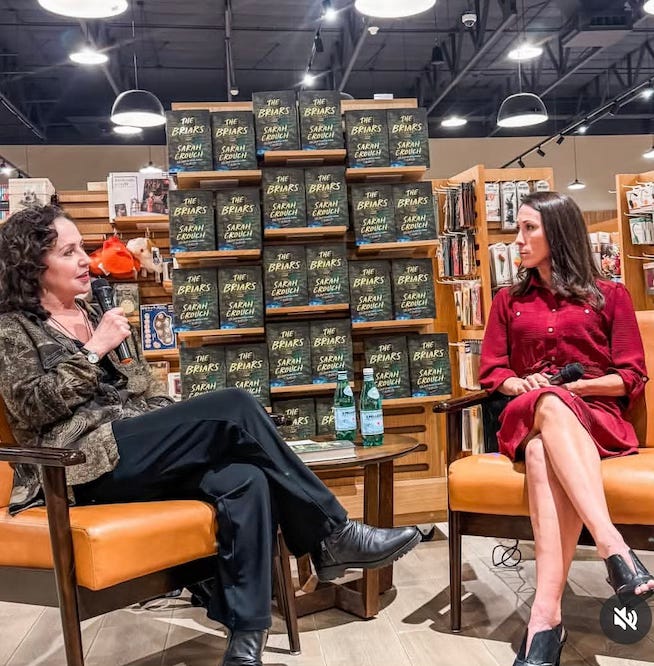
Think about your senses when writing. Ask yourself, how does this place smell? What does that food taste like? What do I hear in the distance? What is that character touching, and how does it feel? What are the colors?
If you set your story, say, in Astoria, Oregon, you have a small, rugged coastal town that reeks like sea lions—fishy and hot—and there is a cacophony of their bellowing, along with fog horns and freight trains. The town feels like grainy wood, and cheap beer condensed on tumblers. It tastes like coastal rain, which is salt, and I think tastes like sadness. Maybe it just tastes like tears.
If you are writing nonfiction, sensory details can mean the difference between a story that feels dry and distant and one that is immediate and compelling.
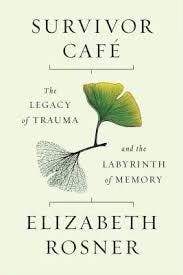
In her brilliant book on epigenetics, Survivor Cafe, Elizabeth Rosner interviews people, and then has lines like this: “The subway, he tells me, still smells the same: overripe fruit and wet leaves and salty air damp from the sea.” Wow.
Think of the ways your setting interacts with your other characters.
Once you have a multi-sensory setting, you can think about the ways your other characters are forced to interact with it. There’s the classic of a wedding ruined—or delighted—by rain, but every scene should have your character inside setting. A car ride might have potholes. That city bus smells like ass.
If your story lags, consider upping the tension through setting. Is your character’s marriage unraveling in the midst of an unprecedented snow storm that will trap both of them in the house? How will your protagonist get her bad guy if the swamp is full of snakes? I’m exaggerating a bit, but you get the idea.
I believe one overlooked reason some books sag in the middle is because the setting has become dull and overly tread. The middle is a good time to introduce a new aspect of setting that brings freshness to the book. Our world is always surprising us, and keeping us on our toes, and that should be true for your setting, too.
That’s it for today! I’d love to hear where you are at in the comments. Please share how you are dealing with setting in your book. I’d love to hear your tricks and methods for writing setting.
Next week we’ll be talking about how you can have literary prose AND write a page-turner too.
As many of you know, my novels are inspired by my justice work. I’ve worked in public defense for almost twenty years, exonerating innocents, helping immigrants and fighting for justice. If you’d like to support my justice work and writing, you can pre-order my forthcoming novel, which is based on my work exonerating innocents—and examines the epidemic of missing women.
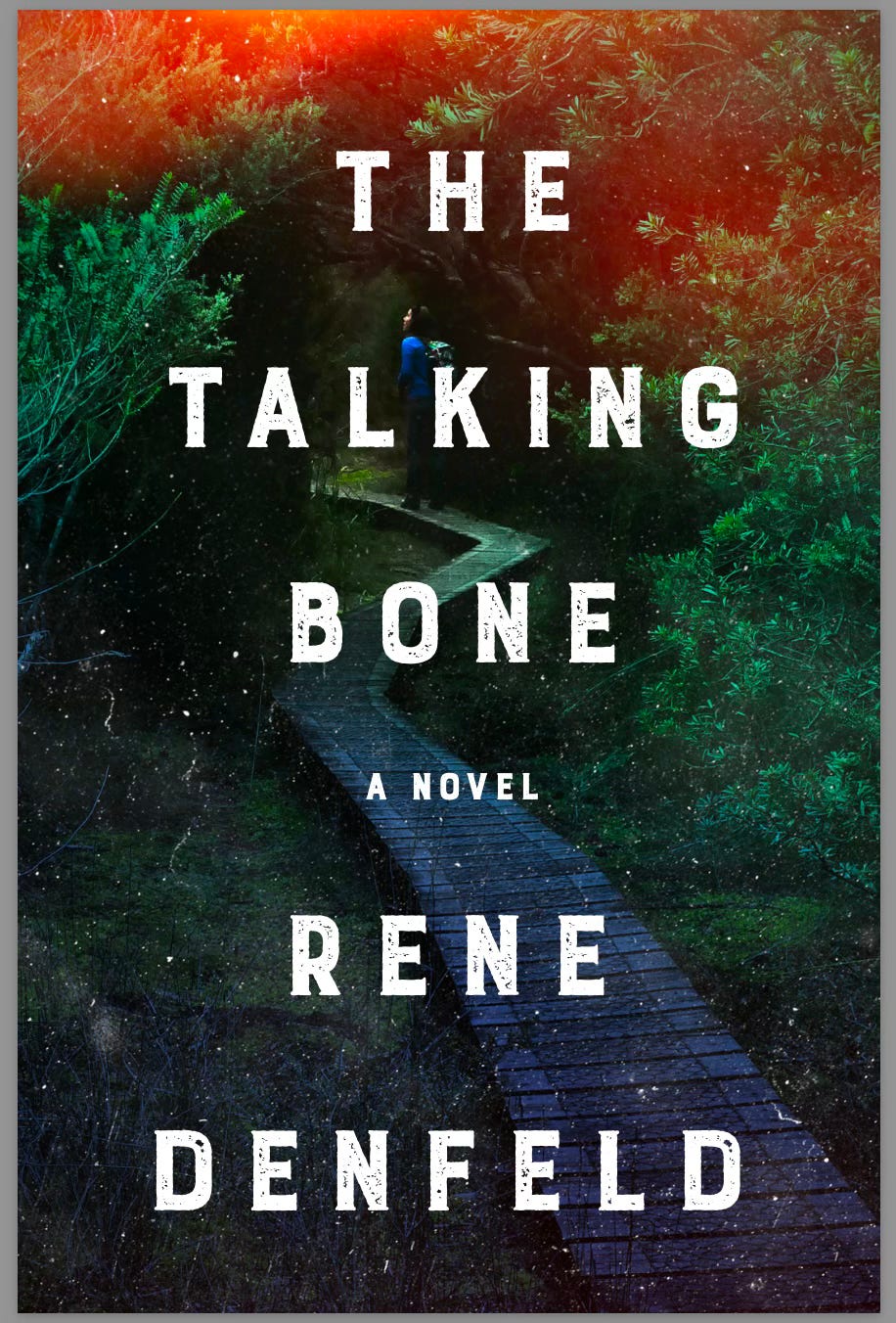
Of course, you can also become a paid subscriber here, too.
See you next week!
I always think of how setting can inform the character and vice versa. If you have a character walking a trail in the fir forests of Oregon, are they afraid of sheer magnitude of the trees, have to push through thickets of Oregon grape, fear wild animals? Or is it a place of peace where the firs smell sweet in the midmorning sun, the forest floor feels spongy beneath their feet, and they remember hikes with their lost love? Setting tells us so much about people. And characters tell us so much about how they live in the world and their situation.
Thanks so much, Rene, for reminding me to be conscious of this. And this is a perfect title for this passage.
💛